







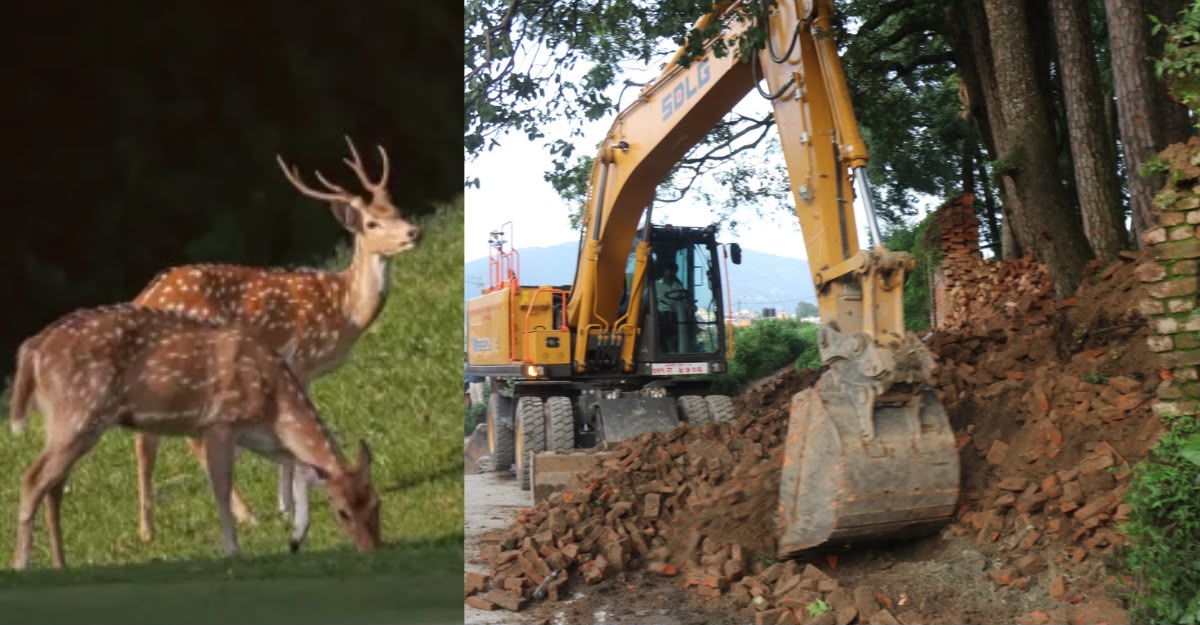
Wall Demolition Renews Debate Over Conservation of Kathmandu Valley’s Last Urban Wilderness
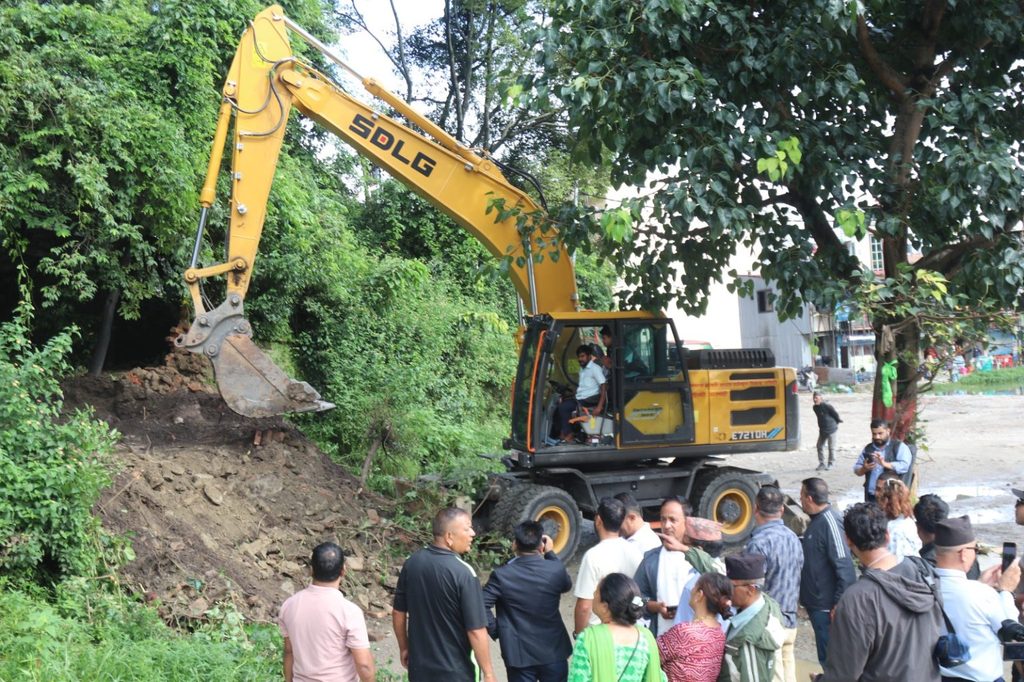
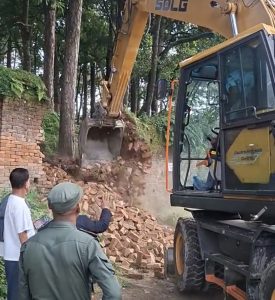
04 August, KATHMANDU: The recent demolition of a section of the boundary wall surrounding Gokarna Forest has triggered a heated political and legal debate. While public attention has largely focused on questions of authority and jurisdiction, conservationists say the discussion has overlooked those most directly affected—the wildlife that inhabits one of Kathmandu Valley’s last remaining natural forests.
The controversy has raised broader concerns about whether adequate environmental safeguards were considered before heavy machinery entered one of the capital’s most ecologically significant landscapes. Experts argue that irrespective of legal disputes over land or infrastructure, any intervention inside or around a sensitive forest ecosystem should prioritize biodiversity conservation.
Located on the northeastern edge of Kathmandu, Gokarna Forest is widely known as a popular recreational destination. Yet beyond its walking trails and serene surroundings, the forest represents one of Nepal’s most important urban ecosystems, providing habitat for a remarkable diversity of wildlife within the boundaries of a rapidly expanding metropolitan area.
The forest is home to spotted deer, barking deer, rhesus macaques, jackals, jungle cats and numerous smaller mammals. It also supports an exceptionally rich bird population, including peafowl, owls, woodpeckers, kingfishers, barbets, parakeets and a variety of migratory species. More than 200 bird species have been documented in and around the forest, making Gokarna one of Nepal’s premier urban birdwatching destinations.
gokarna forest resort
Beyond its biodiversity, the forest performs vital ecological functions for Kathmandu Valley. It absorbs carbon emissions, filters air pollution, moderates urban temperatures, protects groundwater recharge and provides one of the city’s few remaining natural cooling systems. As urbanization accelerates, environmental planners increasingly recognize forests such as Gokarna as critical green infrastructure rather than simply protected land.
Conservationists also believe Gokarna holds untapped potential as a flagship destination for sustainable urban nature tourism.
Unlike many wildlife destinations that require long journeys, Gokarna offers residents and visitors the opportunity to experience Nepal’s natural heritage just minutes from the city center and a short drive from Tribhuvan International Airport. Guided wildlife walks, birdwatching tours, environmental education programs and nature photography excursions could transform the forest into one of Kathmandu’s most distinctive tourism attractions while generating livelihoods for local nature guides and strengthening conservation awareness.
For international tourists, the forest presents an increasingly rare experience. Few capital cities anywhere in the world can offer visitors an authentic natural forest inhabited by wild mammals and hundreds of bird species within the limits of a major urban center. This unique combination of accessibility, biodiversity and recreation gives Gokarna exceptional tourism value.
Environmental experts say this significance demands a far higher level of precaution whenever construction, demolition or infrastructure work is undertaken in or around the forest.
A boundary wall in such an environment is more than a physical structure. It forms part of the broader management system that helps regulate visitor access, discourages illegal entry, minimizes unnecessary human disturbance and, in some areas, reduces the risk of human-wildlife conflict. Whether sections of the wall ultimately remain or are removed, specialists argue that ecological considerations should accompany legal and administrative decisions.
They emphasize that if demolition became legally necessary, it should ideally have been coordinated among forest authorities, wildlife specialists, environmental professionals and security agencies. Environmental risk assessments, wildlife monitoring and temporary mitigation measures could help minimize disruption before heavy machinery is deployed.
Wild animals do not understand legal disputes or political decisions.
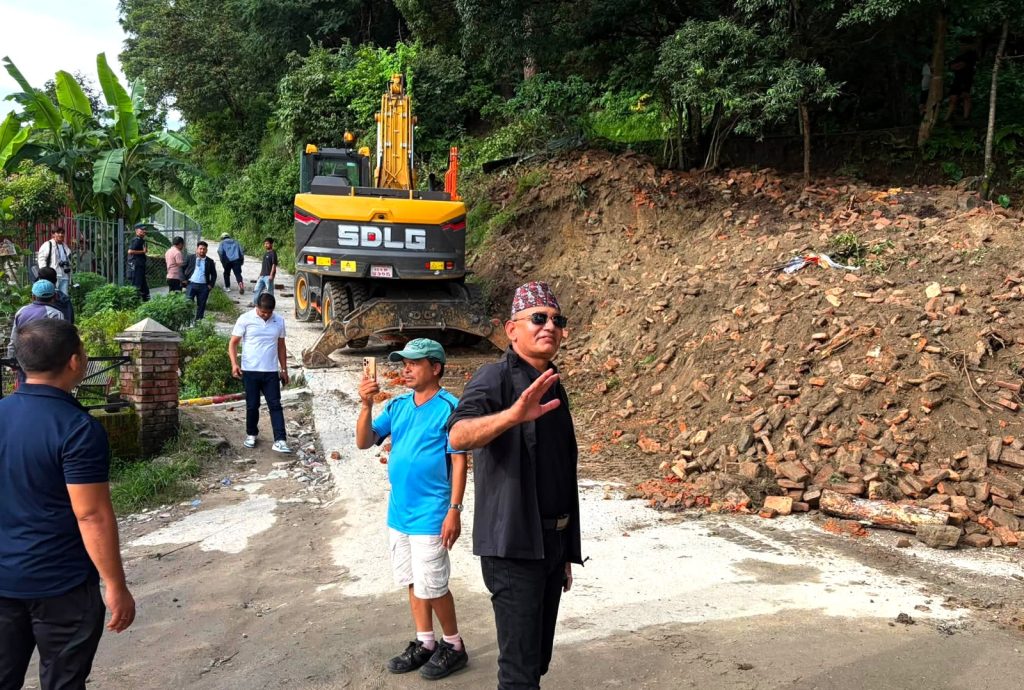
What they do experience is disturbance.
The sudden arrival of bulldozers, loud equipment and increased human activity can alter wildlife movement patterns, interrupt feeding and breeding behavior, elevate stress levels and increase the likelihood of animals moving into nearby settlements or roadways. Even relatively short-term disturbances can produce ecological impacts that persist long after construction activity has ended.
The debate surrounding Gokarna therefore extends beyond questions of legal authority. It also raises important issues about how development, governance and environmental stewardship can coexist within sensitive ecosystems.
Conservation advocates stress that the rule of law and biodiversity protection should reinforce—not undermine—one another. While governments have a responsibility to enforce legal decisions, they also bear an equally important obligation to safeguard natural heritage for future generations.
As Nepal positions itself internationally as a destination for sustainable tourism and conservation, Gokarna Forest represents a rare opportunity to demonstrate how wildlife protection, responsible recreation and urban development can coexist.
Ultimately, the long-term significance of the recent wall demolition may not lie in who ordered the operation, but in whether sufficient ecological care accompanied it.
Physical infrastructure can always be rebuilt.
Restoring a disturbed ecosystem—and rebuilding the sense of security wildlife depends upon—is far more difficult.
For many observers, the greatest lesson from Gokarna is that while political debates often dominate public attention, the forest’s quietest inhabitants remain the ones with the most at stake. Protecting one of Kathmandu Valley’s last urban wildernesses is not only an environmental responsibility but also an investment in Nepal’s biodiversity, sustainable tourism and the quality of life of future generations.












+ There are no comments
Add yours